How many tools a small guesthouse actually needs
Minimum viable list of tools to run a small urban guesthouse with judgment. No over-equipping, no under-equipping, no universal recipes that apply to every property.
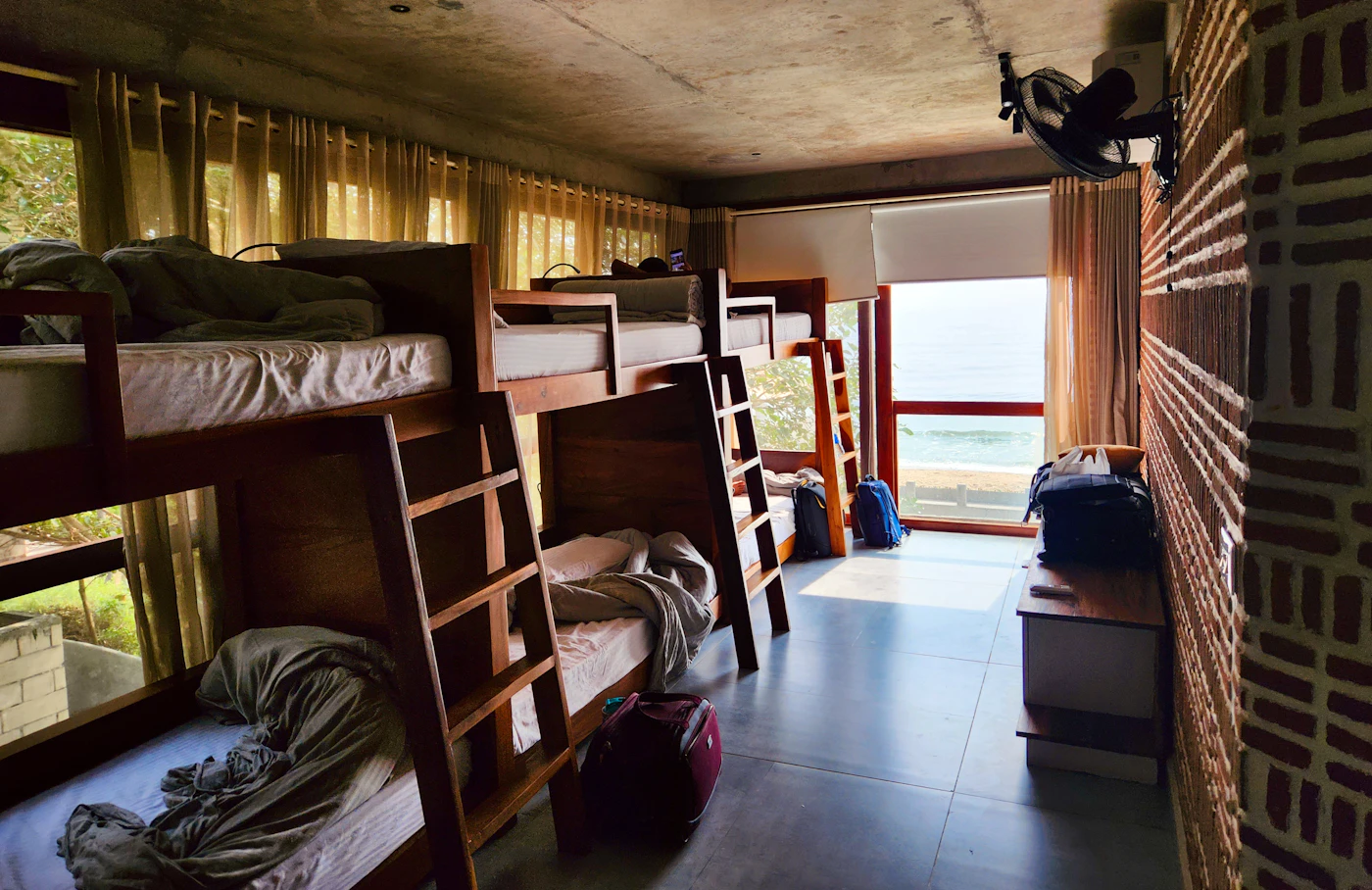
Picture a 14-room urban guesthouse in a mid-sized Spanish city. Reception from 8 am to 10 pm, a two-person team, and an owner who also rolls up their sleeves when needed. Annual revenue between 200,000 and 400,000 euros. ADR around 60 to 90 euros depending on season. Occupancy between 65% and 80% year-round.
The question is not “what tools does a guesthouse like this use”. The question is: how many pieces does its stack need to operate professionally, without excess and without gaps? The short answer: five core pieces, a sixth strongly recommended, and everything else is debatable.
Piece 1: PMS (property management system)
The PMS is the heart of the stack. It is where the inventory lives, where bookings are managed, where check-in and check-out happen, where invoicing originates. It is the single source of truth. Without a professional PMS, the rest is held together with duct tape.
A 14-room guesthouse does not need a chain-grade PMS with modules for 40 disciplines. It needs one that covers the basics well: inventory and rate management, native integration with channel manager and booking engine, an invoicing module, POS connection, integration with the tourism legal-compliance systems.
Key decision: a PMS with channel manager and booking engine built in as modules, or an open PMS connecting to external channel manager and booking engine. For a small guesthouse, the first option is usually simpler to maintain and cheaper in the long run.
Piece 2: channel manager (or its equivalent module within the PMS)
We covered this in the previous post. In an urban guesthouse with a presence on Booking, Expedia and at least one other platform, the channel manager is indispensable. Without it, overbookings stop being an exception and become a regularity.
In practice, if you pick the PMS well, the channel manager comes as a native module and you do not have to contract anything separately.
Piece 3: booking engine on your own website
This is the piece that adds the most margin and the most underrated one. Every booking that comes in through your own site does not pay commission to Booking (15-18% depending on the case) or to any intermediary. In a guesthouse with 1,500 annual bookings and an ADR of 70 euros, the honest math goes like this: each percentage point that moves from OTA to direct is about 1,050 euros of revenue changing channels, not new money. The real gain is the commission you stop paying: roughly 160 to 190 euros a year per point (at 15-18%), and more if your stays run several nights. Not spectacular, but recurring, and it stacks point by point.
The booking engine has to be integrated with the PMS (so availability is real), it has to work well on mobile (most urban bookings are made from a phone) and it has to have a short purchase flow, without unnecessary steps. Three clicks and the booking is done.
Piece 4: access control and digital check-in
This is where real operational load gets freed up in an urban guesthouse. Afternoons with several simultaneous arrivals saturate reception. If guests can check in online before arriving, validate their ID from a phone and receive the access code to their room, reception attendance stops being a bottleneck.
This calls for:
- Electronic locks with codes that rotate per booking (or an equivalent solution).
- An online check-in platform that validates IDs and submits them to the authorities in compliance with regulations.
- Integration with the PMS so the flow is automatic.
This is not optional in guesthouses without 24-hour reception. It is what separates a modern guesthouse from one that lives permanently at the edge of its staffing.
Piece 5: ERP and connected invoicing
Bookings turn into accounting revenue. If that conversion is manual, someone spends hours a month invoicing by hand. If it is automated via a PMS-ERP connection, invoices generate themselves, get emailed to the client and post to the accounting books on their own.
The ERP you pick depends on size and on tax specifics. For a guesthouse of this size, a cloud ERP with a native or API connection to the PMS is the reasonable choice. What is not reasonable is continuing to issue invoices by hand, one at a time.
Strongly recommended piece 6: communications automation
This piece is not “essential to operate” but it is the one that delivers the biggest jump in perceived quality. A system that automatically sends:
- A booking confirmation with useful instructions (how to get there, nearby parking, check-in hours).
- A reminder 24 hours before arrival.
- A welcome message on check-in day with the access code.
- A check-out reminder the day before.
- A review request 48 hours after check-out.
Your team can send all those messages by hand. It will take 5-10 minutes per booking. Multiply by 1,500 annual bookings and that is 125 to 250 hours of work a year. Either you automate it and reclaim that time for things technology cannot do, or you keep paying for it in hours.
What’s usually overkill in a small guesthouse
The following tools get sold often to accommodations of this size and, in most cases, do not bring enough value to justify the cost:
- A sophisticated RMS with automated pricing: for a 14-room guesthouse, a manual weekly review with good judgment usually performs the same or better at zero added cost.
- An advanced CRM with complex segmentation: a small guesthouse does not have the repeat-client volume to justify a CRM with advanced marketing modules. A clean database in the PMS is usually enough.
- A dedicated mobile app for guests: outside very specific cases, guests do not download apps for small guesthouses. WhatsApp and browser-based check-in cover the same ground at no cost.
- Task management systems for housekeeping with dedicated apps: for a guesthouse with a 2-3 person team, a paper checklist or a dedicated WhatsApp chat usually works. Task management apps make sense from 30-40 rooms or multi-property upward.
What happens when pieces are missing
If the professional PMS is missing, the whole stack wobbles. If the channel manager is missing, you get overbookings. If the booking engine on your own site is missing, you give away unnecessary commission. If access control is missing, reception is saturated and the staff is overloaded. If the connected ERP is missing, someone loses hours each month invoicing by hand.
What can be missing without serious harm is communications automation, as long as the team covers that function manually. But it is the first piece to add when there is additional investment capacity.
Rough cost of the minimum stack
The five core pieces plus communications automation, well negotiated, add up to between 250 and 500 euros a month in licences in a guesthouse of this size. Those are fees paid to each tool vendor, not Lares fees. The figure looks scary at first glance. Compared to the cost of not having it (overbookings, lost hours, extra OTA commissions due to lack of a direct channel, regulatory risk from manual compliance), it is usually one of the most profitable expenses of the year.
Closing: five and a half pieces
A right-sized stack means exactly this: the pieces your accommodation actually needs, not one more, not one less. Five core pieces, a strongly recommended sixth, and plenty of sales noise around them. If you are setting up or reviewing the stack of your guesthouse, request the initial diagnostic: thirty minutes to separate what your specific case needs from what only the vendor needs you to buy.
Tags: urban guesthouse · tech stack · PMS · automation · investment decisions